
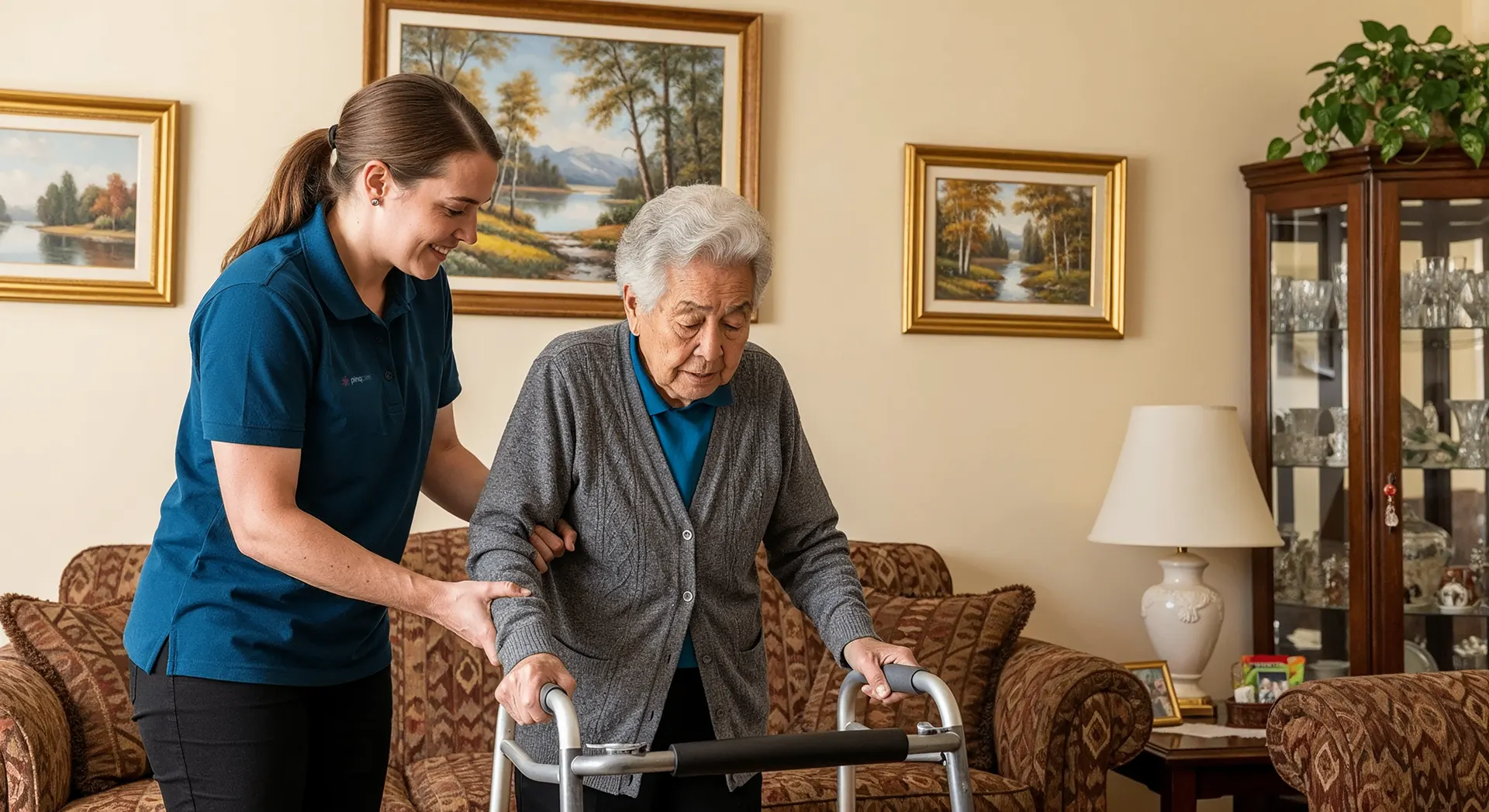
- Occupational therapy supports safety and independence for older Australians living at home.
- Therapists conduct home assessments and recommend home modifications to reduce risks.
- Assistive devices and training help clients perform daily tasks with confidence.
- OT is a fully funded clinical support under the Support at Home framework.
- Family members and caregivers also receive education and support.
Reviewed and updated July 2026 to reflect the Support at Home program.
An occupational therapy home safety assessment is a therapist’s structured walk-through of your home - checking bathrooms, stairs, lighting, floors and furniture layout - that ends in a practical plan of modifications, equipment and safer techniques. Under Support at Home, OT is a clinical support: fully government-funded for eligible participants, with no contribution. Here’s what an assessment involves and what usually changes as a result.
What Is Occupational Therapy?
Occupational therapy is a client-focused healthcare service that helps people continue doing the activities that matter most to them. For older adults, this means staying confident with everyday tasks like dressing, bathing, cooking and moving safely around the home.
Therapists work to remove barriers – physical, cognitive or environmental – so you can keep living life your way.
What Happens in an OT Home Safety Assessment?
Your therapist evaluates your home to identify hazards or obstacles that could increase the risk of falls and injuries. Common focus areas include bathrooms, stairs, lighting, floor surfaces and furniture layout. This helps them understand how you move through your space day to day.
Home Modifications for Safety
Based on their assessment, therapists suggest tailored home modifications and changes like: • Grab rails near showers and toilets
- Non-slip mats or flooring
- Brighter lighting in hallways or on stairs
- Lever handles instead of round knobs
- Rearranged furniture to create clear pathways
These small changes make a big difference for safety and independence.
Assistive Devices and Technology
Therapists recommend assistive equipment to help clients carry out everyday activities with greater ease. These may include:
- Shower chairs and raised toilet seats
- Reachers, dressing aids, and modified utensils
- Walking aids such as rollators or walking frames
- Fall detectors, personal alarms, or medication reminders
Therapists also provide training so clients feel confident using these tools independently.
Teaching Safer Daily Routines
In addition to modifying the environment, occupational therapists teach clients safer techniques for:
- Transferring in and out of bed
- Navigating stairs or uneven surfaces
- Reaching high or low storage areas
- Dressing and grooming with limited mobility
By learning safer movement strategies, clients can protect themselves while staying active in their routines.
Adapting Meaningful Activities
Occupational therapy goes beyond safety, It’s also about maintaining joy and purpose. Therapists help clients continue hobbies and interests, even if mobility has changed. For example:
- Switching to seated gardening
- Using adaptive kitchen tools for cooking
- Finding alternative methods for painting, reading, or writing
This approach supports mental well-being, independence, and engagement.
Benefits of Occupational Therapy in Home Care
Occupational therapy offers a range of benefits for older adults receiving care at home:
- Reduced risk of falls and injury
- Improved confidence and self-reliance
- Continued participation in meaningful activities
- Enhanced home comfort and accessibility
- Increased support for caregivers and family members
When combined with other in-home services, occupational therapy helps clients age safely and comfortably in place.
Frequently Asked Questions (FAQs)
Modifications like grab rails, non-slip flooring, ramps, or lever taps may be covered through the Assistive Technology and Home Modifications (AT-HM) scheme, which sits alongside your regular Support at Home budget - so approved modifications don’t reduce your ongoing services.
Occupational therapy is flexible and responsive. Therapists can reassess your needs and adjust your care plan as your health or home environment evolves.
Occupational Therapy is included as a clinical support under the Support at Home program - fully government-funded for eligible participants. Your Care Partner arranges it around your needs and goals.
Not necessarily. Your Care Partner can help connect you with a qualified occupational therapist as part of your care plan.
Yes. Family members or caregivers are encouraged to be part of the assessment and education process, especially if they provide day-to-day support.
- Assisted Living Advice
- Carer Support & Resources
- Dementia & Memory Support
- End-of-Life Care & Planning
- Family & Relationship Guidance
- Government Support & My Aged Care
- Health & Wellbeing
- Home Safety & Accessibility
- In-Home Care Tips
- Legal & Financial Planning
- Mental Health in Ageing
- Mobility & Exercise
- Nutrition for Seniors
- Tech & Tools for Seniors
- Transitioning to Aged Care
Final Thoughts
Occupational therapy for aged care at home promotes both safety and independence. Through expert home assessments, tailored recommendations, and empowering education, occupational therapists help older Australians live more confidently in their own homes.